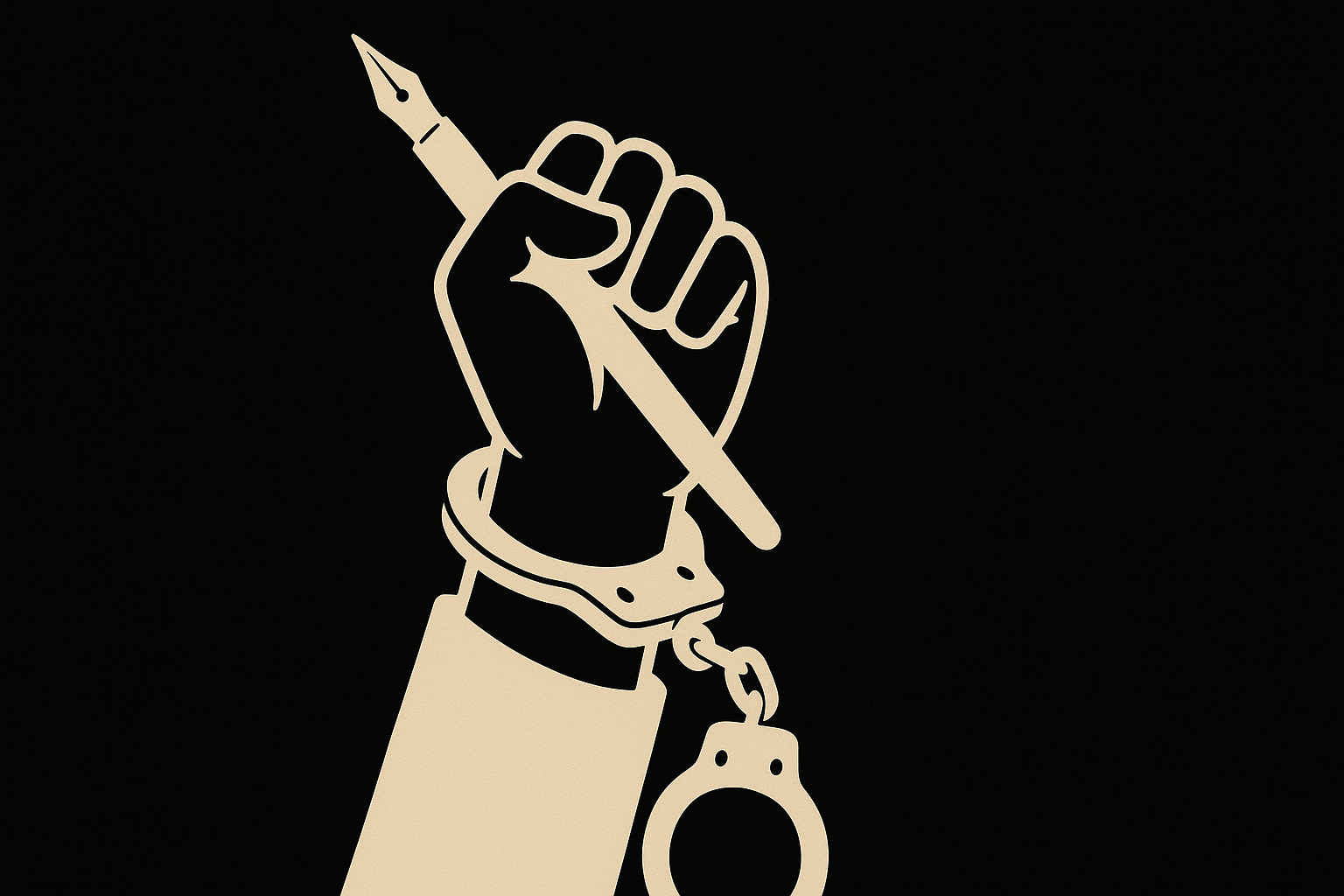
War reporting is among the most ethically fraught and methodologically complex forms of journalism. It is a field where truth itself becomes contested, where the line between witness and participant is often blurred, and where the very act of reporting can shape the narrative as much as it records it.
And yet, despite these ubiquity of war, explicitly detailed methodologies for best practise in war reporting are rare, with journalists frequently relying on intuition, experience, or editorial convention, rather than a codified framework for making sense of the violence they witness.
This absence of methodology is not merely an academic oversight. It reflects the nature of war itself: a domain of obfuscation and deliberate narrative manipulation, where competing interests seek to shape the story in their favour (Knightley, 2004). As one World War I historian observed, “war is fought in this fog of falsehood, a great deal of it uncovered and accepted as truth” (Winter, 2014, p. 27). Navigating this fog demands not only an instinct for verification but also a considered methodology that understands the interplay of fact, power, and narrative.
Many of the foundational texts on war reporting focus on the culture of the correspondent, the heroism of the job, and the impact of propaganda (Knightley, 2004; McLaughlin, 2002; Harris & Williams, 2019). Yet they stop short of offering a step-by-step approach to the reporter’s role as a mediator between chaotic reality and public understanding. Manuals such as Hunter’s Story-Based Inquiry (Hunter et al., 2011) excel at explaining the ‘hows’ of journalism—how to source, how to verify, how to write—without interrogating the philosophical ‘why’. This gap in the literature is especially striking in the case of conflict journalism, where the stakes are not just professional but moral.
In my own conflict reporting, I have drawn on the metaphor of Walter Benjamin’s Angelus Novus—Klee’s ‘Angel of History’ who sees the past not as a chain of events but as a single catastrophe, ever-growing as it is propelled by the storm of progress (Benjamin, 1940).
I see the war reporter’s gaze as similarly partial: we see only fragments of the wreckage, driven onwards by the demands of deadlines, editorial agendas, and personal survival. Like Benjamin’s angel, we are both observer and participant in a process we cannot fully control.
Accepting this perspective requires a certain philosophy and reach for empathy that is too often absent in discussions of objectivity. Just as there is no atheist in a fox-hole, the ideal of perfect neutrality is as aspirational as it is illusory, particularly in war zones where access itself shapes perception (Simpson, 1998).
Journalists embedded with military units, for instance, often find themselves influenced by the empathy that proximity breeds. As Herr (1977) noted of Vietnam, the closer one is to the soldiers, the harder it is to maintain a detached perspective. And yet, as Pedelty (1995) has shown, the alternative—reporting from the safety of hotels or capital cities—brings its own biases, its own limitations on what can be known and told.
A robust methodology of war reporting, then, must begin with the recognition that objectivity is not a fixed point but a constant negotiation. I believe it requires the cultivation of what anthropologist Clifford Geertz (1973) called “thick description”. An attempt to situate actions within the webs of meaning that make them comprehensible. In practice, this has meant for me to look beyond the immediate spectacle of violence to the historical, cultural, and social contexts in which that violence is embedded.
The methodology of war reporting
This methodology of war reporting is, at its core, one that weds rigorous empirical investigation with a commitment to cultural and ethical reflexivity. It requires a blending of data-driven reporting—triangulation of sources, statistical analysis, and critical examination of official narratives—with an interpretative approach that seeks to understand the meaning behind acts of violence and the lived experiences of those caught within conflict. Rather than relying solely on the detached observation of events, it embraces the anthropological practice of thick description (Geertz, 1973), ensuring that each act of reporting is deeply embedded in its social and historical context.
Crucially, this methodology insists on the importance of reflexivity: a constant questioning of the reporter’s own positionality, biases, and limitations. It demands an honest acknowledgement of how one’s identity—whether national, racial, or class-based—shapes the act of witnessing itself. This approach does not treat objectivity as a static ideal, but as a dynamic process of self-scrutiny and openness to alternative perspectives (Frosh & Wolfsfeld, 2007). In practical terms, this means seeking out the voices that are too often excluded from mainstream narratives, ensuring that the hierarchies of death and suffering that structure war are not simply reproduced in the pages of the press.
Finally, this methodology draws on the power of narrative—not as a substitute for accuracy, but as a tool for revealing the deeper truths that lie within data. It recognises that human beings make sense of violence through story, and that the journalist’s role is to weave together fact and meaning in ways that illuminate, rather than obscure. Narrative, here, is not about sentimentality or embellishment; it is about using the techniques of literary journalism—scene-setting, metaphor, character—to reveal the human dimension of war’s inhuman statistics (Sims, 1984; Herr, 1977). In doing so, this methodology aims to bear witness not just to events, but to the meaning of those events in the lives of the people who endure them.
Hierarchies of death
Such a methodological approach also has demanded from me an acute awareness of the hierarchies of death and suffering that so often shape conflict narratives. As we have often noted here at AOAV, mainstream English-language media outlets reports only a fraction of the casualties from explosive violence in Syria and Afghanistan (Overton, 2022). This underreporting is not merely a failure of resources; it also reflects structural biases about which lives are deemed worthy of attention (Frosh & Wolfsfeld, 2007).
To challenge these biases, I have often turned to the tools of microhistory and anthropology—fields that accept the impossibility of total knowledge yet insist on the value of partial insights.
As one of the great influences on my work Ginzburg (1993) argued, the close analysis of a single fragment can illuminate broader systems of power and belief. In my books Gun Baby Gun (Overton, 2015) and The Price of Paradise (Overton, 2019), I adopted this approach by focusing not just on the statistics of violence but on the lived experiences of those whose lives had been irrevocably altered by the gun and the bomb.
This microhistorical lens also required in me a self-reflexivity about the reporter’s own position. My own identity—as a white, male, middle-class British journalist—inevitably shaped what I could see and what I could not (Overton, 2022). It also meant that I had to constantly question my role in perpetuating the very hierarchies I sought to expose. As Foucault (1980) reminds us, truth is always entangled with power, and the journalist is never a neutral bystander.
Ethics must – I argue – be at the core of this methodology. It is not enough to be accurate; one must also be just. The BBC’s Editorial Guidelines and the Society of Professional Journalists’ Code of Ethics both stress the importance of minimising harm and treating subjects with respect (BBC, 2021; SPJ, 2014). These are not merely procedural rules; they are moral imperatives. In my interviews with victims of violence, for instance, I have often found that the act of listening—of being present without imposing a narrative— as important as the act of reporting (Rubin & Rubin, 2012).
Narrative itself, however, is also essential. Long-form, literary journalism—what some have called the “nonfiction novel” (Capote, 1965)—can provide the space to capture the textures and contradictions of war that the news cycle too often flattens. The narrative arc, the carefully chosen metaphor, the voice of the witness—these are not embellishments but essential tools for making sense of the incomprehensible (Sims, 1984). War, let us be frank, is a foreign land and the war reporter needs to be a witness to the living (and the dead) to navigate its strange terrains.
This narrative impulse, however, must be balanced with a relentless commitment to verification. In my work, I have sought to balance the vividness of narrative with the rigour of data: 713 endnotes in Gun Baby Gun and 1,235 in The Price of Paradise (Overton, 2022). As Kovach and Rosenstiel (2014) argue, transparency about sources and a willingness to show one’s workings are essential to maintaining trust in an age of misinformation.
Of course, even the most careful methodology cannot eliminate the fundamental challenges of war reporting. Access is often dictated by governments, by military escorts, or by the threat of violence itself (UNESCO, 2022). In Somalia, I refused to venture down ‘sniper’s alley’; in Lebanon, I was detained by Hezbollah and forced to abandon my questions (Overton, 2022). These limits are not just personal—they shape what can be known and what can be reported.
Nor can any methodology resolve the tensions between the need to bear witness and the need to protect oneself and one’s sources. The dead, as I have written elsewhere, are always my starting point (Overton, 2019). But they are also a reminder of the stakes: that each story told is a negotiation between the living and the memory of those who can no longer speak.
A final element of this methodology must be a willingness to embrace complexity. In an age of polarisation and propaganda, the war reporter’s role is not to offer easy answers but to insist on the messy, contested nature of truth. As Judith Butler (2009) argues, images of suffering can be co-opted for political ends; the reporter’s task is to resist these reductions, to insist on the humanity of those who have been turned into symbols.
In sum, a methodology of war reporting must be one of constant questioning. It must be guided by the principle that what matters is not just what is seen, but how it is seen—and why it is told. It is a methodology of doubt and of hope: doubt in the easy answers that conflict always offers, and hope that by bearing witness with care, we might do some measure of justice to those whose lives have been torn apart by war.
This is not merely a professional framework. It is a moral stance. In an era where conflicts are as much about controlling the narrative as they are about controlling territory, the journalist’s task is to insist on complexity and dignity. It is to refuse the hierarchies of death, to remember the wounded as well as the dead, and to see in each fragment of wreckage the possibility of a future not yet written.
In this way, the methodology of war reporting becomes a way of seeing the world: an attempt to navigate the fog of falsehood without surrendering to it, to recognise the limits of one’s own vision, and yet to keep searching for the connections that might turn fragments into meaning.
It is, in the end, a methodology that demands both scepticism and compassion—qualities without which no true reporting can exist.
References
BBC (2021) Editorial Guidelines. London: BBC.
Benjamin, W. (1940) Theses on the Philosophy of History. In Arendt, H. (ed.) Illuminations. New York: Schocken.
Butler, J. (2009) Frames of War: When is Life Grievable? London: Verso.
Capote, T. (1965) In Cold Blood. New York: Random House.
Foucault, M. (1980) Power/Knowledge: Selected Interviews and Other Writings 1972-1977. New York: Pantheon.
Frosh, P. and Wolfsfeld, G. (2007) ‘Imagi(ni)ng the Dead: Journalism, Visuality and the Israeli-Palestinian Conflict’, Media, Culture & Society, 29(1), pp. 105–129.
Geertz, C. (1973) The Interpretation of Cultures. New York: Basic Books.
Ginzburg, C. (1993) ‘Microhistory: Two or Three Things That I Know About It’, Critical Inquiry, 20(1), pp. 10–35.
Harris, S. and Williams, P. (2019) Reporting War and Conflict. London: Routledge.
Herr, M. (1977) Dispatches. London: Picador.
Hunter, M., et al. (2011) Story-Based Inquiry: A Manual for Investigative Journalists. Paris: UNESCO.
Kovach, B. and Rosenstiel, T. (2014) The Elements of Journalism. New York: Three Rivers Press.
Knightley, P. (2004) The First Casualty. Baltimore: Johns Hopkins University Press.
McLaughlin, G. (2002) The War Correspondent. London: Pluto Press.
Overton, I. (2015) Gun Baby Gun. Edinburgh: Canongate.
Overton, I. (2019) The Price of Paradise. London: Quercus.
Overton, I. (2022) PhD by Publication. University of Portsmouth.
Pedelty, M. (1995) War Stories: The Culture of Foreign Correspondents. New York: Routledge.
Rubin, H. J. and Rubin, I. S. (2012) Qualitative Interviewing: The Art of Hearing Data. London: Sage.
Simpson, J. (1998) Strange Places, Questionable People. London: Macmillan.
Sims, N. (1984) The Literary Journalists. New York: Ballantine.
SPJ (2014) Code of Ethics. Indianapolis: Society of Professional Journalists.
UNESCO (2022) Safety of Journalists. Paris: UNESCO.
Winter, J. (2014) Sites of Memory, Sites of Mourning. Cambridge: Cambridge University Press.